Essays

Two new essays on the Black artists, lofts, and creative networks that shaped SoHo — commissioned for Black SoHo.

Essay

Dreaming in Space: The SoHo Loft as an Ecosystem of Possibility

In the summer of 1970, my father, painter Frederick J. Brown, arrived in New York City from Chicago and hailed a taxi cab directly to the SoHo loft of jazz pioneer Ornette Coleman. Entering Coleman’s loft at 131 Prince Street, he recalled,

When the doors opened on Ornette's space, I said to myself, "I've been looking for this place all my life." Pharaoh Sanders and Alice Coltrane were sitting there, with Ed Blackwell, Charlie Haden, Charles Moffett, and Dewey Redman. There was art all around, swinging beds and beautiful instruments. It was like Shangri-La. Ornette's place was the headquarters for all of the real New York avant-garde, the center where everyone gravitated. It was a great place to play pool, listen to some of the best music in the world, as well as dream big about making it in New York.1

For artists like my father, who came to SoHo to live and work at the center of American contemporary art, lofts like Coleman’s were stages to enact visions of aesthetic, social, and institutional freedom that did not exist outside of their walls.

As SoHo took shape in the late 1960s, Ornette Coleman established one of the neighborhood’s early creative and social focal points at 131 Prince Street.2 Dubbed Artist House, Coleman created an incubator, hosting music performances and art exhibitions, integrating visual and sonic form as he sought to push the framework of jazz or collective improvisation into multidisciplinary form.3

Artist House held several exhibitions by visual artists between 1971 and 1974, including Camille Billops (1973) and Vivian Browne (1974). Coleman’s Artist House gave Black artists a unique platform to exhibit their work in SoHo, as New York’s art centers continued to marginalize artists of color. Further, it offered a model of equity for Black creatives, foregrounding creative and social self-direction through the undefined space the lofts provided.

In the winter of 1972, Frederick J. Brown founded the 120 Wooster loft studio and creative community. Brown, like Coleman, transformed a bare-bones decommissioned urban manufacturing site into an artistic focal point within SoHo – a laboratory for aesthetic innovation in multiple mediums, an infrastructure for visibility of Black artists, and a multiracial social center.

Working in his loft, Brown expanded the scale of his artistic practice, utilizing the over 5,000-square-foot space to execute monumental paintings that drew upon subjects such as Black music, outer space, biblical narratives, and familial histories steeped in African American and Native American intercultural traditions. Brown’s color field abstractions broke the mold of the period’s fixation on object-centric formalism, instead incorporating gesture, spatial depth, narrative, and, critically, figuration into the abstract plane.

In creating a multidisciplinary program at 120 Wooster Street, Brown sought to bring a wide spectrum of art forms including music, performance, poetry, dance into the world of visual art, hosting performances, rehearsals, and collaborating with other artists equally invested in multidisciplinary form.4 Brown’s cultivation of an expansive network of collaborators and community members speaks to the loft scene’s development as an ecosystem sustained and defined as much by the fluid movement of artists between creative points throughout New York City as SoHo itself.

Ed Clark and David Hammons stand as two figures whose fluidity in place and practice reflected and informed the nature of the SoHo loft scene as an ecosystem whose tributaries extended throughout New York City.

Throughout his career, Ed Clark maintained an elastic sense of place. Taking up residence in cities around the world, Clark drew inspiration from the sense of space gleaned from each environment he encountered. With a sweep of his push-broom paintbrush, Clark captured the transience and constant movement that shaped his life and practice. Moving from Paris to New York in 1957, Clark first established a studio in the East Village, where he co-founded the Brata Gallery, an artist-run cooperative gallery that was a center point within the Tenth Street Gallery community. In the early 1960s, Clark settled in Chelsea, where he maintained his New York base of operations through 2015. Though Clark did not live in SoHo, his inclusion in exhibitions such as his 1971 solo show at Donald Judd’s 101 Spring Street loft demonstrates both his influence and peer status among artists in SoHo and the wider downtown scene who were investigating ideas of space and new models of abstraction.

In the example of Clark, and other artists of older generations who were active in the SoHo loft scene, such as Coleman, Romare Bearden, and Norman Lewis, we see that the downtown milieu also provided a site for intergenerational exchange that extended far beyond the boundaries and walls of SoHo’s lofts. In the 1970s, Clark and Lewis5, for example, both spent time at the summer residence of abstract painter Jack Whitten in Crete, leading them to create works responding to their experience on the Mediterranean island, as represented in Lewis’s Sheaves (1975).

David Hammons, like Ed Clark, did not live in SoHo, yet his contributions to the neighborhood’s wider ecosystem were significant. In works such as his famed body print series, Hammons paved a critical pathway for works of art to exist as heterotopic marks of the creative moment, informed as much by the environment of production as by anything else.6 Hammons arrived in New York in 1974 from Los Angeles, establishing a studio in Harlem. From Harlem, Hammons exhibited work throughout the city, often presenting assemblages and found objects in nontraditional sites such as Sara Penn’s Knobkerry boutique in the East Village. Hammons exhibited mostly at gallery spaces outside of the immediacy of SoHo, such as Linda Goode Bryant’s Just Above Midtown gallery, and Corrine Jennings and Joe Overstreet’s Kenkeleba House on the Lower East Side, as well as downtown street corners, as famously displayed in his Bliz-aard Ball Sale (1983).7

SoHo’s development as an artistic community stemmed from both artistic production within its boundaries and from the influx of creative production from adjacent neighborhoods and communities that, like tributaries, fed into the wider ecosystem of the loft scene. The transience that defined artists such as Hammons and their practice was not atypical, but rather a definitive aspect of the ethos of SoHo and the downtown scene. From this state of liminal oscillation, in terms of place and practice, Hammons shaped an aesthetic of conceptual critique that, today, lies at the forefront of contemporary art.

For many artists, the artwork is not a product separate from the space that engendered it, but rather a mark of the creative moment executed in space. In filmed performances from 1973, both Frederick J. Brown and Camille Billops explicitly rendered the concept of the loft as a stage for creative action. Brown’s film entitled “Portrait of an Artist” was created in collaboration with Anthony Ramos. Billops created an untitled film which accompanied her Artist House exhibition Ceramic Sculptures. In both films, works of art function as remnants or evidence of the gestalt or total artistic experience of the loft.

These films, additionally, document the emergence of a narrative figurative abstraction tied to the gestalt of the loft and the fluidity between art and life it engendered. Pioneered by Frederick J. Brown, and other artists within SoHo’s loft ecosystem, this neo-expressionism provided an avenue for the narrative subject matter, the experience of Black iconography, Americana, art history, the urban landscape, and the loft itself to all be encapsulated while also confronting and creating a dialogue with contemporary art which, by the mid-1970s, had dug its heels firmly into object-centric formalism. It is within this context that Jean-Michael Basquiat emerged – drawing on the figurative expressionist language of Brown, Billops, and others, while constructing works within the same transient ecosystem of the downtown loft scene that artists such as Clark and Hammons helped forge. At the moment of his stardom as well as in recent art historical frameworks, Basquiat has been positioned between the commercialist lens of Andy Warhol, fellow pioneers of street art such as Keith Haring, and the load-bearing weight of the art world’s desire to consume and define “Black art” and “Black artist” within the lens of a primitivist mystic.8 The result is a narrative about Basquiat that labels him as an anomaly, a “sole genius” and the torchbearer and definitive figure of “Black art” and Black artists within the downtown scene. Despite the prevalence of this limited reading, it is critical to recognize that Basquiat was informed by the downtown scene he entered in the late 1970s and early 1980s. He absorbed, like a sponge, the emergence of graffiti, hip-hop, punk rock and no wave subcultures. At the same time, through the established Black loft community in SoHo, the young painter was exposed to an Afro-diasporic aesthetic lexicon that was radically challenging and redefining the racialized formalism that dominated contemporary art.9

In 1981, Basquiat occupied the basement of Annina Nosei’s gallery at 100 Prince Street (mere blocks from Frederick J. Brown’s 120 Wooster Street studio). That same year, Basquiat had starred in Downtown 81, a film which follows the young painter and graffiti artist as he seeks to sell a painting to afford his rent.10 Like the filmed performances of Brown and Billops, Downtown 81 demonstrates how the artwork is a product of the total artistic experience and environment, a complete collapse between art and life, captured through the lens of Basquiat, who, first as a graffiti artist, and then as a studio painter, used visual form to reflect a cosmology of lived experience. Downtown 81 is set in the downtown/SoHo loft scene that Black artists, a generation before Basquiat, had forged – an environment that gave birth to landscapes of contemporary art and popular culture that crystallized by the 1980s.

Today, SoHo’s artistic legacy remains defined by the image of celebrated heroes and mega-stars of contemporary art, such as Donald Judd, Andy Warhol, James Rosenquist, and Basquiat. Yet, the artists exhibited in Black SoHo provide a critical signal for the retelling and acknowledgment of SoHo's founding as an ecosystem where Black artists led a multiracial, international, multidisciplinary community committed to exploring improvisational form, staging the loft as a medium of possibility and a space to dream.

Notes

  1. 1.

    Frederick J. Brown, Interviewed by Lowery Stokes Sims, Scottsdale, Arizona, 1998.

  2. 2.

    Coleman purchased the building’s first and third floors in 1968 from the Fluxus cooperative housing project at the suggestion of his friend and collaborator, Fluxus member, Yoko Ono.

  3. 3.

    Brent Hayes Edwards points out that Coleman owned one of the earliest hand-held video cameras and incorporated both the action of filming and the subsequent video into performances at Artist House, as a mode of both documentation and expression. Coleman fed the live recording into a large television during performances, creating “visual noise”. Saxophonist James “Plunky” Branch recalls,

    [Coleman’s] concept of video was, when the music would go wild, he would turn dials to make the thing go out of focus, or make the thing have video lines, make video noise […] He was playing video like it was playing the saxophone, which As observed by Branch, Coleman understood the visual as an instrument, further evidenced by his invitations to visual artists to “perform” visually during sonic performances.; Plunky Branch quoted in Edwards, “The Two Ages of Artist House: Ornette Coleman on Prince Street,” 2016

  4. 4.

    Some of Brown’s frequent collaborators that made up the 120 Wooster Street loft community included pioneering video artist Anthony Ramos, jazz musicians and composers Anothony Braxton and Henry Threadgil, poets Felipe Luciano, Gylain Kain, and Nikki Giovannil, Henry Threadgill, painters Gregoire Muller, Edvins Stratmanis, and Frank Bowling, and multi-disciplinary artists Malcolm Mooney, Jean-Claude Samuel, and Claude Lawrence, amongst others.

  5. 5.

    Lewis maintained a SoHo studio at 64 Grand Street from 1967 until his death in 1979.

  6. 6.

    Hammons’s body print series was included in exhibitions during this period.

  7. 7.

    Hammons’s Bliz-aard Ball Sale was staged on a downtown street corner in 1983.

  8. 8.

    Lowery Stokes Sims, “Appropriation and Cultural Diversity: The Dynamic of the New Exclusion in the Art World,” speech given at the conference Artists of Diverse Cultures: Towards an Inclusive Art History, Metropolitan Museum of Art and The Studio Museum in Harlem, 1987.

  9. 9.

    Lowery Stokes Sims, “Introduction,” in Robert Farris Thompson, Aesthetic of the Cool: Afro-Atlantic Art and Music, Pittsburgh: Periscope Publishing, 2011, 2-4; Robert Farris Thompson, "African Influence on the Art of the United States," in Black Studies in the University: A Symposium (New Haven: Yale University Press, 1969), 149.

  10. 10.

    Downtown 81, starring Jean-Michel Basquiat, was filmed in 1980–81 and released in 2000.

About the Author

Bentley Brown is an artist, curator, and Professor of Art, Art History and Curatorial Studies at Arizona State University and New York University. His artistic practice and research explores 1960s–1970s downtown New York, American interculturalism, and urban Southwestern Americana.
Essay

The Women of “Black SoHo” and the Making of an Avant-Garde

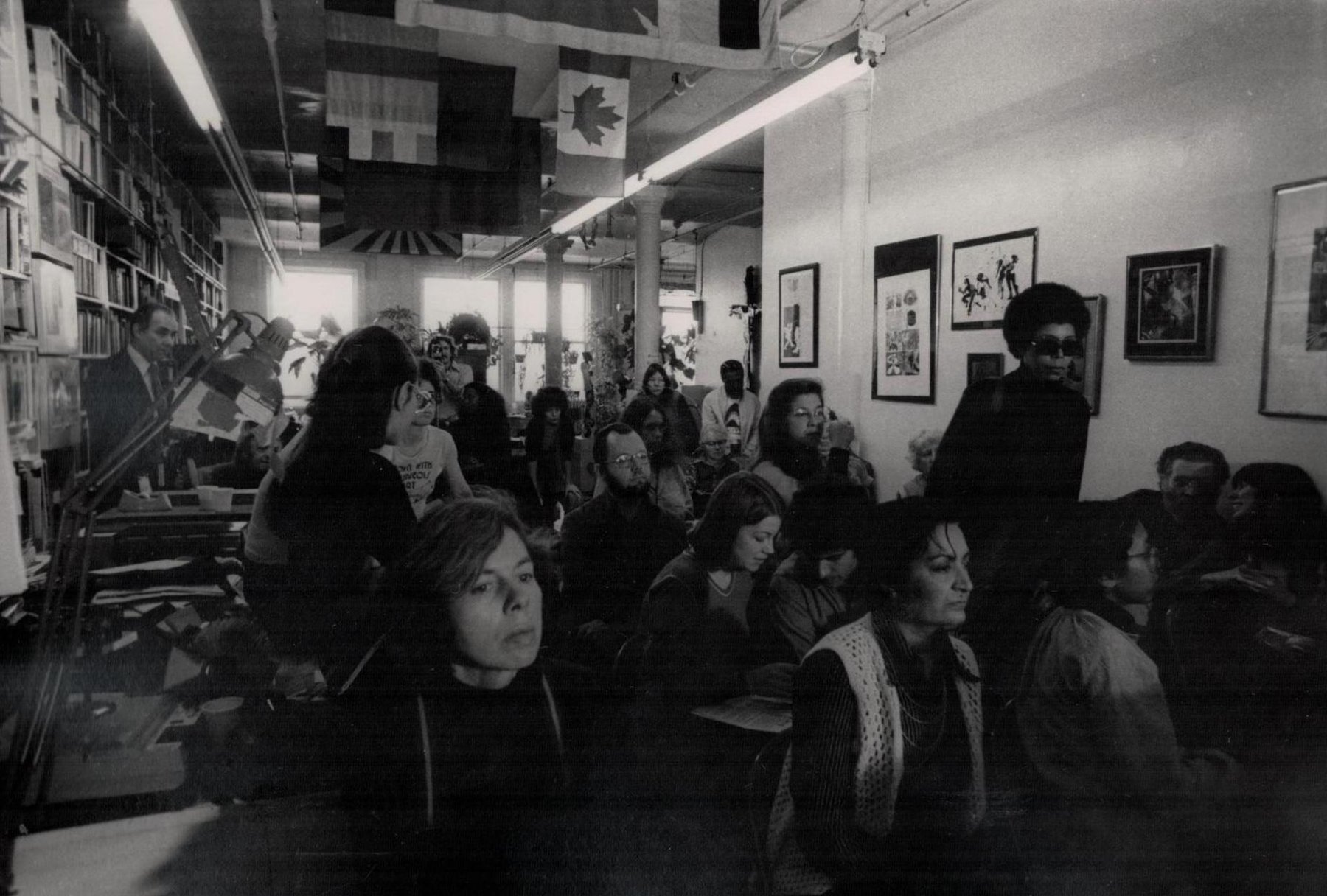
On October 13, 1978, Camille Billops sat on a panel at the feminist art gallery SOHO20. Camera in hand, she spoke of the need for self-determination for Black women. In an article entitled Third World Women Speak, curator and critic Lowery S. Sims reports Billops explaining: “only blacks could take responsibility for the documentation of their presence in the country’s cultural life.”1

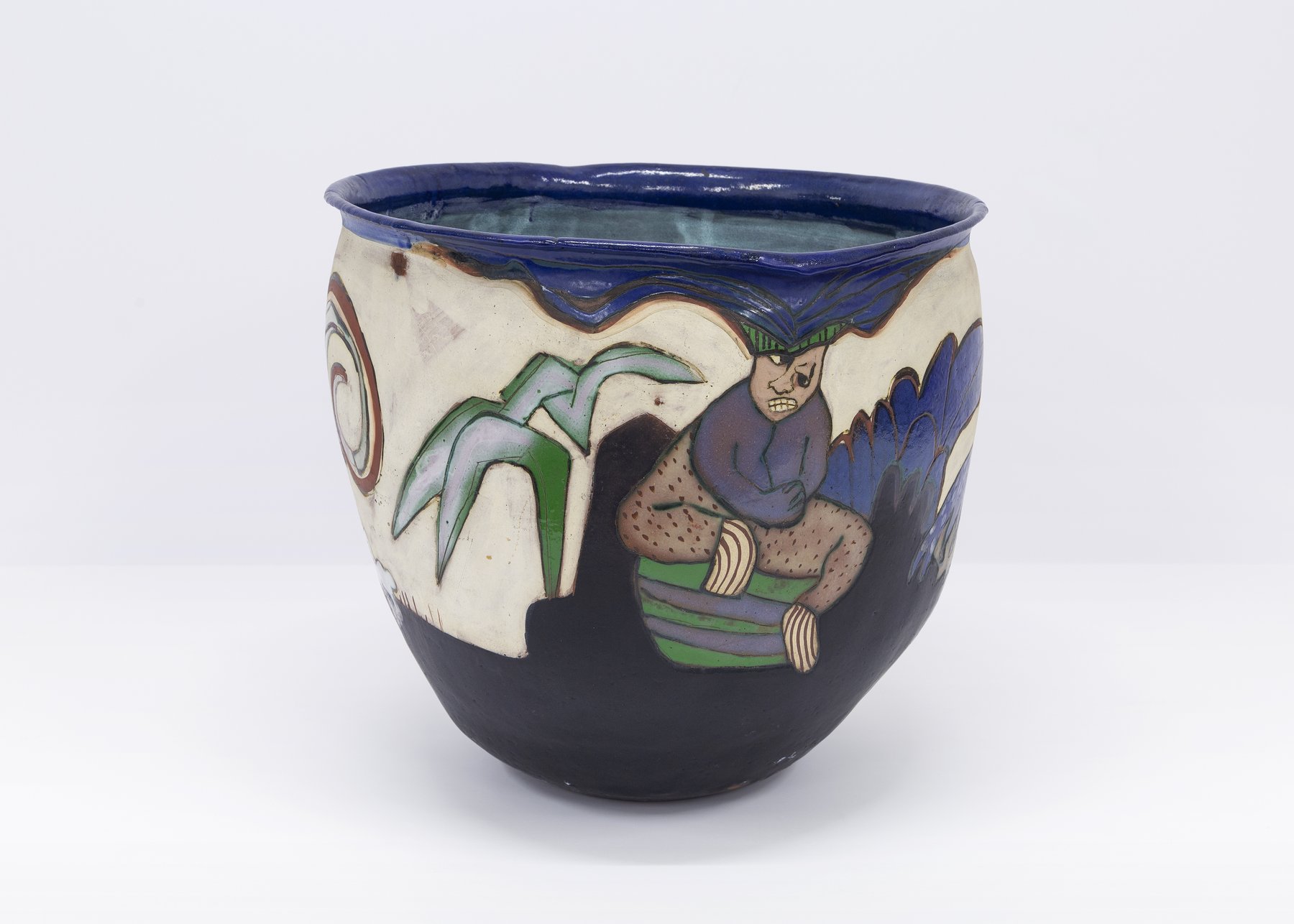
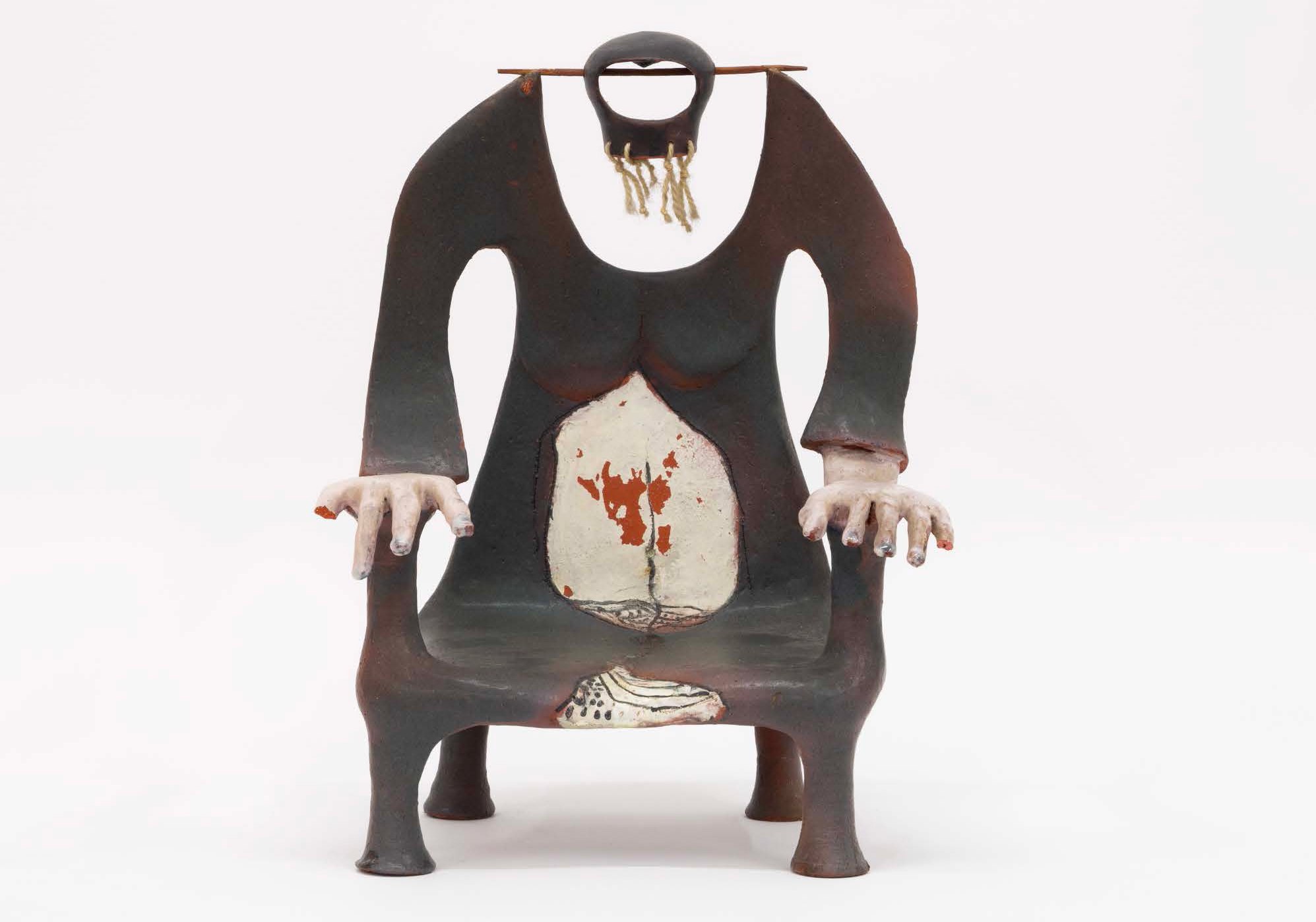
Camille Billops was no Black separatist. Married to a white academic, she engaged with majority-white feminist organizations in SoHo and beyond, joining SOHO20 as a member in 1979, and contributing to the feminist collective/publication Heresies. By insisting on the need for Black cultural sovereignty for both men and women, she was speaking from a place of confidence, as she steadily built around herself a nucleus of activity at the heart of “Black SoHo.” A sculptor, printmaker, and filmmaker, Billops drew her visual language from an imaginary world of biomorphic, dreamlike figures, shaped by early travels in Cairo, Egypt and an influential 1967 trip to India. Her 1971 sculpture Mother distills this sensibility. Its seated body lingers on shaped breasts and pubic hair, carved with the regal weight of a throne; the sculpture captures an allegory of femininity in full command of itself, unbound by any conventional idea of womanhood. Her subsequent ceramic Christa’s Pot (3 Figures) is a reflection of her continued interest in femininity and domestic crafts.

Camille Billops, Christa's Pot (3 Figures), 1981
Camille Billops, Christa’s Pot (3 Figures), 1981.
Camille Billops, Mother, 1971
Camille Billops, Mother, 1971.

Billops acquired her loft in SoHo in 1973 with her husband, the academic James V. Hatch. Their multi-purpose home quickly became a gathering place for legions of racially diverse artists, writers, musicians, activists, playwrights, filmmakers, actors, and poets to discuss contemporaneous social, cultural, and political issues. In this space, Billops and Hatch organized exhibitions, interviews, artist talks, poetry readings, book launch parties, musical performances, political gatherings, and anti-racist rallies. “The loft represents being an artist,” Billops explained to her husband in a 1973 interview.2 It was here, in her home at 491 Broadway, that Billops established herself as a cultural force at the proverbial center of New York’s artistic world, and the unofficial record-keeper of the minority artists that made SoHo thrive.3 She and Hatch formalized this role in 1981 with the launch of Artist and Influence, a self-financed oral history journal that would run for thirty years, publishing interviews with Black artists, writers, filmmakers, and art historians whose lives and work had gone largely undocumented elsewhere.4

1979 Black Emergency Cultural Coalition teach-in at the Hatch-Billops loft
1979 Black Emergency Cultural Coalition teach-in at the Hatch-Billops loft.

The Hatch-Billops loft was only one node in a wider network of Black artistic life rooted in SoHo. Romare Bearden, considered one of the foundational figures of twentieth century Black American art, first acquired his own loft on Canal Street in 1956.5 Attracted by the cheap, expansive industrial spaces opening downtown, Bearden chose to cross the invisible color line that had long confined artists to majority-Black neighborhoods in Brooklyn or Harlem. As SoHo emerged as a dynamic artistic center, he was joined by such names as Norman Lewis, Jack White, Frederick J. Brown, Melvin Edwards, William T. Williams, Algernon Miller, and Jack Whitten, among many others. The legendary jazz musician Ornette Coleman acquired a loft at 131 Prince Street in 1968.6 Dubbed Artist House, the loft became a performance and exhibition space, giving Billops and the artist Vivian Browne their first solo exhibitions in New York City, in 1973 and 1974 respectively.

As the civil rights movement burst through the United States, a constellation of important Black cultural organizations cropped up around SoHo: the Robert Blackburn Printmaking Workshop in Chelsea, Kenkeleba House in the Lower East Side, Acts of Art in Greenwich Village, Cinque Gallery on Astor Place, and the Spiral group’s gallery in the West Village. Formal and informal artist collectives addressing the specific needs and urgencies of Black minority artists developed throughout the 1960s and 1970s as well: the Black Emergency Cultural Coalition (BECC), a protest group organized in response to the consistent exclusion of Black artists from museum exhibitions; Black Artists Meeting, founded to inform the public of challenges faced by Black artists in the United States; and Where We At?, a womanist artist collective formed in response to the failure of the feminist and Black Power movements alike to uplift and affirm Black women artists. These artist collectives were in no way confined to traditionally Black neighborhoods, and met in artists’ homes and studios, in and out of SoHo.

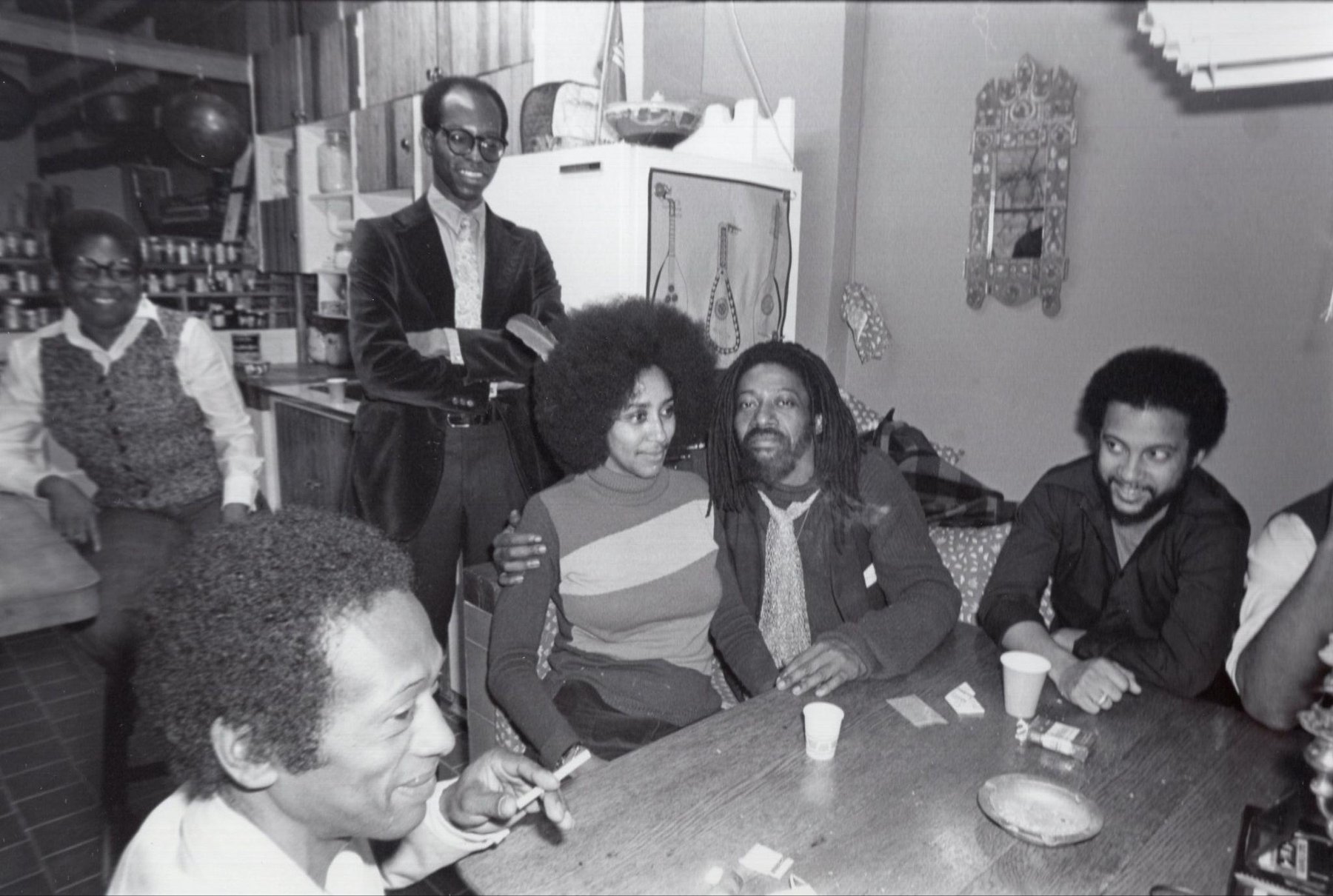
1978 Black Artists Meeting at the Hatch-Billops loft
1978 Black Artists Meeting at the Hatch-Billops loft. L–R: Dorothy White, Jack White, Ray Black, Camille Billops, Ellsworth Ausby, Algernon Miller.

Though the names and organizations listed so far may seem dominated by men, Billops was far from the only Black woman artist carving a space for herself in SoHo. Largely shut out of the mainstream art world, this demographic of artists generated an immensely dynamic culture of collaboration and solidarity that has been overlooked or forgotten by race-neutral accounts of SoHo’s history as an artistic mecca.7 This is a byproduct of what the art historian Maya Harakawa refers to as "downtown exceptionalism": the tendency within postwar American art history to treat "downtown" as a synonym for "avant-garde" or "experimental."8 Harakawa develops this argument primarily in relation to scholarship surrounding Harlem; I extend it here to the parallel case of Black women artists who did work within SoHo itself, yet remained excluded from its historical narrative. Billops and her peers were, in other words, triply excluded: shut out of the traditional gallery system on account of both their race and gender, and written out of "downtown" as a label — a term that in retrospective art history functions less as a neighborhood designation than as a value judgment about whose work counts as experimental.

As such, the term "Black SoHo" is useful here to designate both a practice and a place: Black participation in the downtown avant-garde, one as real and as rooted as anyone else's, despite being consistently overlooked by the official record.9 Indeed, these women were not latecomers riding the coattails of a bohemian SoHo already in full swing, but rather active builders of a community of artists who supported, exhibited, critiqued, and championed one another's work. It should be noted that contributions to “Black SoHo" didn't happen only among those who lived and maintained lofts between Houston and Canal Streets, but also among artists who brought their contributions from other neighborhoods across New York. Faith Ringgold, for example, a towering figure of postwar American art, lived in Harlem. It was from there that she carried her creative energy and furious talent into downtown New York's most cutting-edge, dissent-heavy spaces.

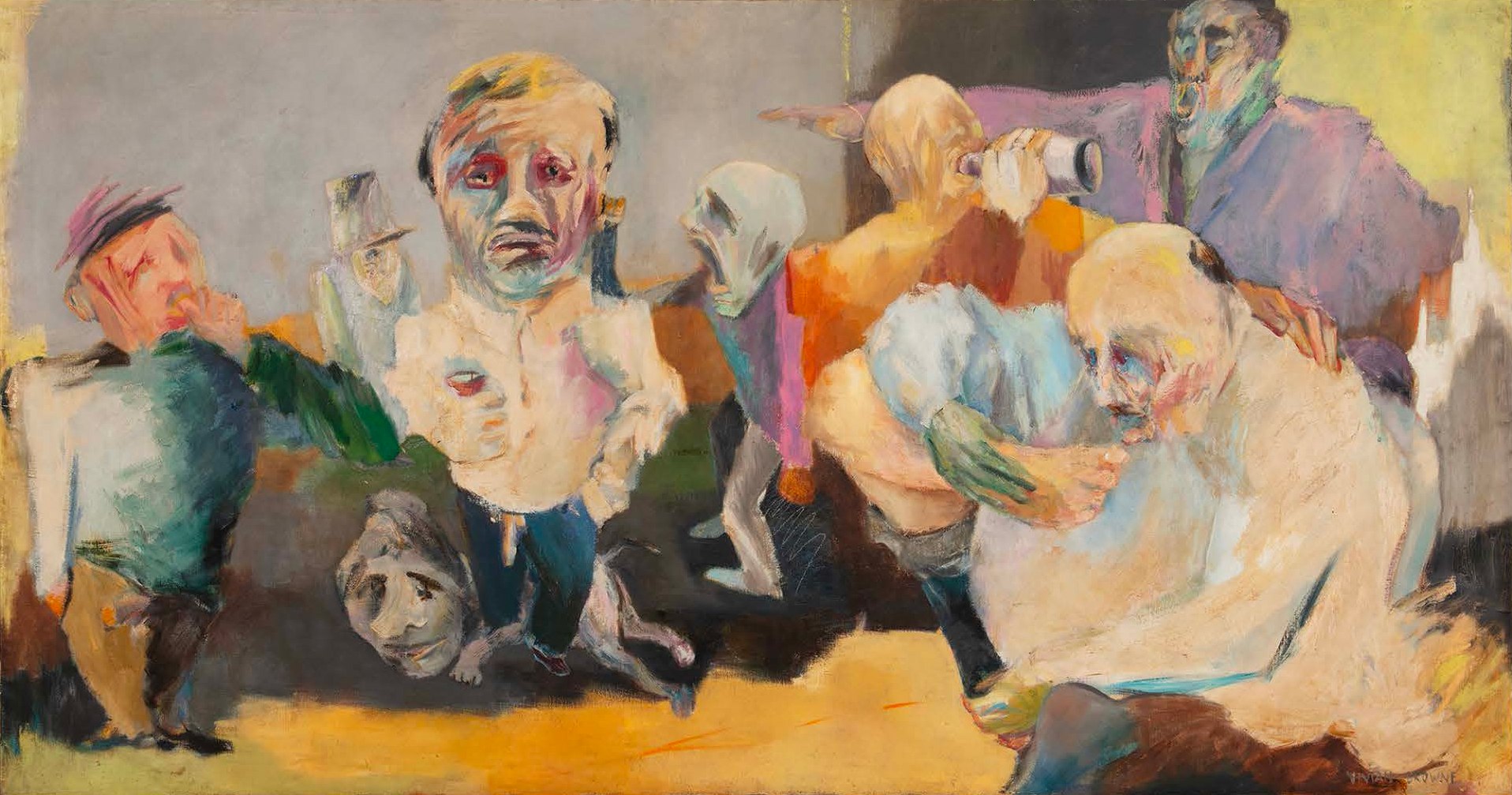
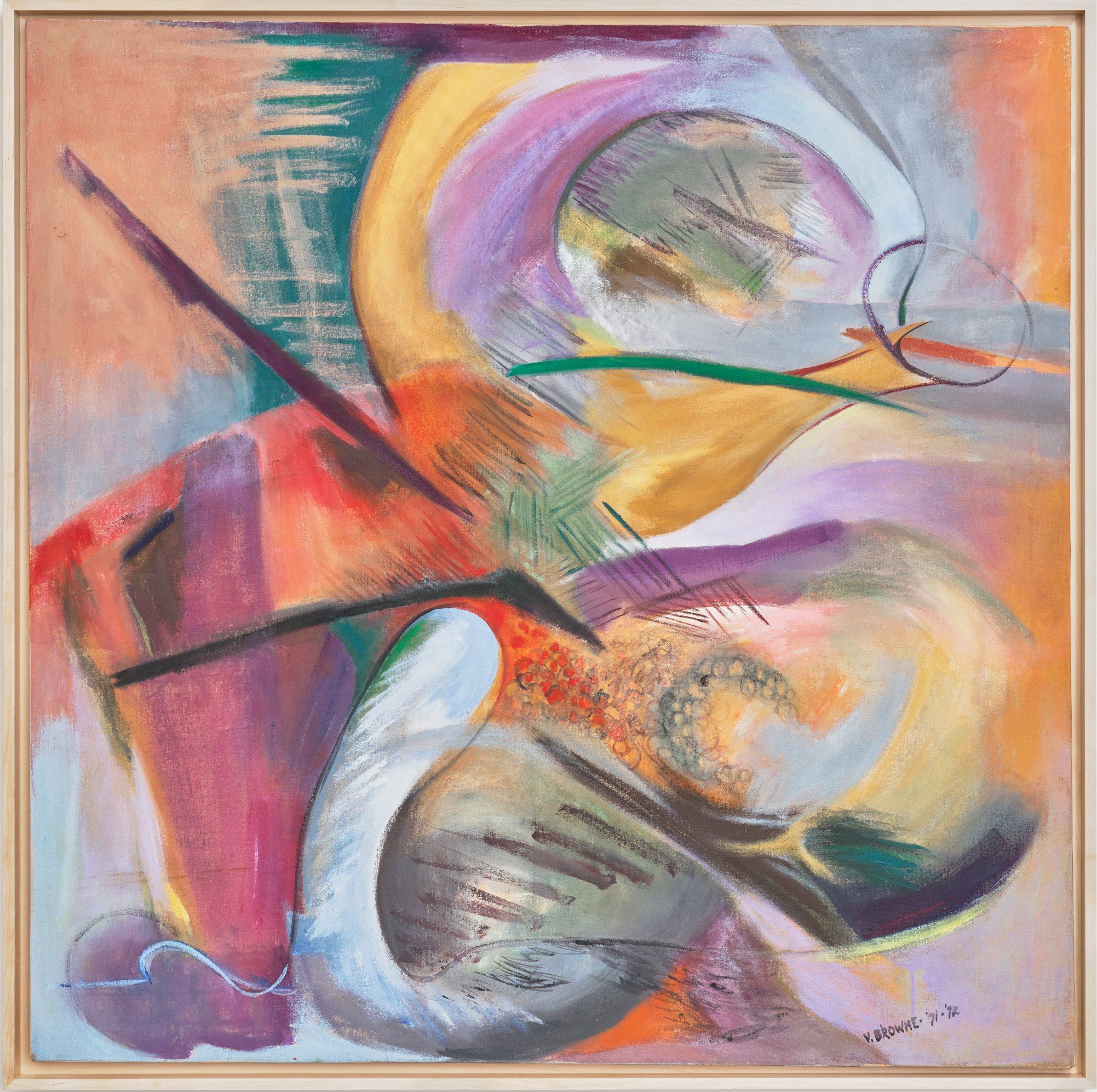
The artist Vivian Browne acquired her loft at 451 West Broadway in 1968, guided by her friend Norman Lewis.10 Browne became an indomitable force in SoHo, straddling with relative ease civil rights and feminist circles. A painter first and foremost, her first major series was her Little Men paintings on paper, a series of small, biting caricatures of white men rendered whining and infantile, fists balled like fat babies mid-tantrum. These works, feverishly completed at the height of the civil rights movement, are her most stringent protest works, culminating in the monumental painting Seven Deadly Sins (c. 1968), which was exhibited at her solo show at Ornette Coleman's Artist House. Also exhibited at Artist House, Guard of the Palace (1971-72) reflects Browne’s shift to abstraction in her lauded Africa Series— a shift in form that articulated her belief that as a Black woman she had a right to paint in whichever style she desired.

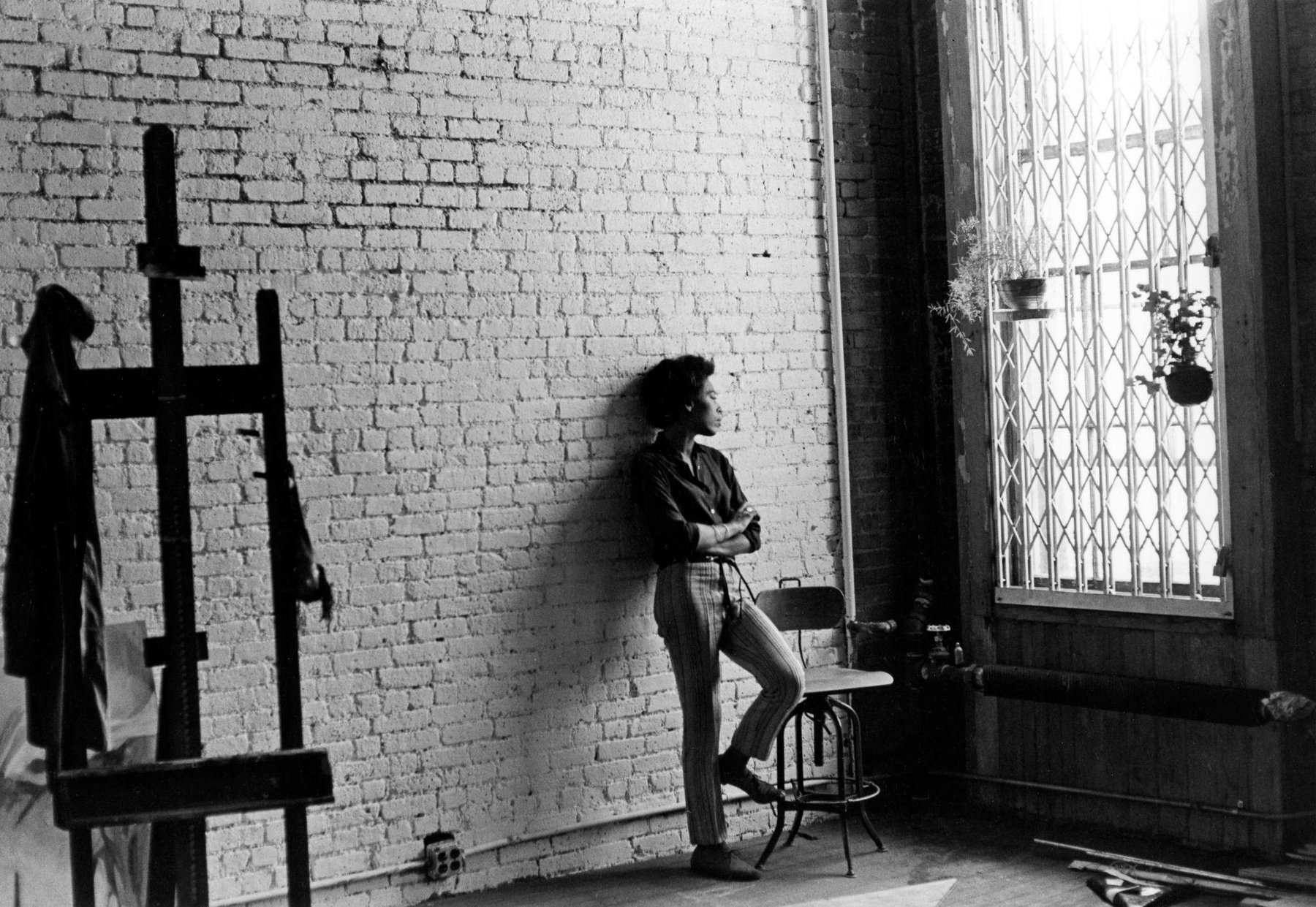
Vivian E. Browne in her studio, 1974
Vivian E. Browne in her studio, 1974. Photograph by Camille Billops.
Vivian Browne, Seven Deadly Sins, c. 1968
Vivian Browne, Seven Deadly Sins, c. 1968.
Vivian Browne, Guard of the Palace, 1971–1972
Vivian Browne, Guard of the Palace, 1971–1972.

Browne was an early member of the SoHo Artists Association, the group that organized in 1970 to lobby for the rezoning permitting artists to legally live in their formerly industrial lofts, thus placing her at the advent of SoHo’s rise as a destination for artists.11 In 1969, she cofounded the BECC, and later joined the cooperative gallery SOHO20 on Wooster Street, remaining an active member until her death in 1993. Browne played an important role in furthering Black feminist consciousness in downtown New York and beyond. Though she never became a member of Heresies’s Mother Collective, she played an active role in the conversations surrounding race and feminism, participating in Third World Women: The Politics of Being Other (1979) and editing the later issue, Racism is the Issue (1982).

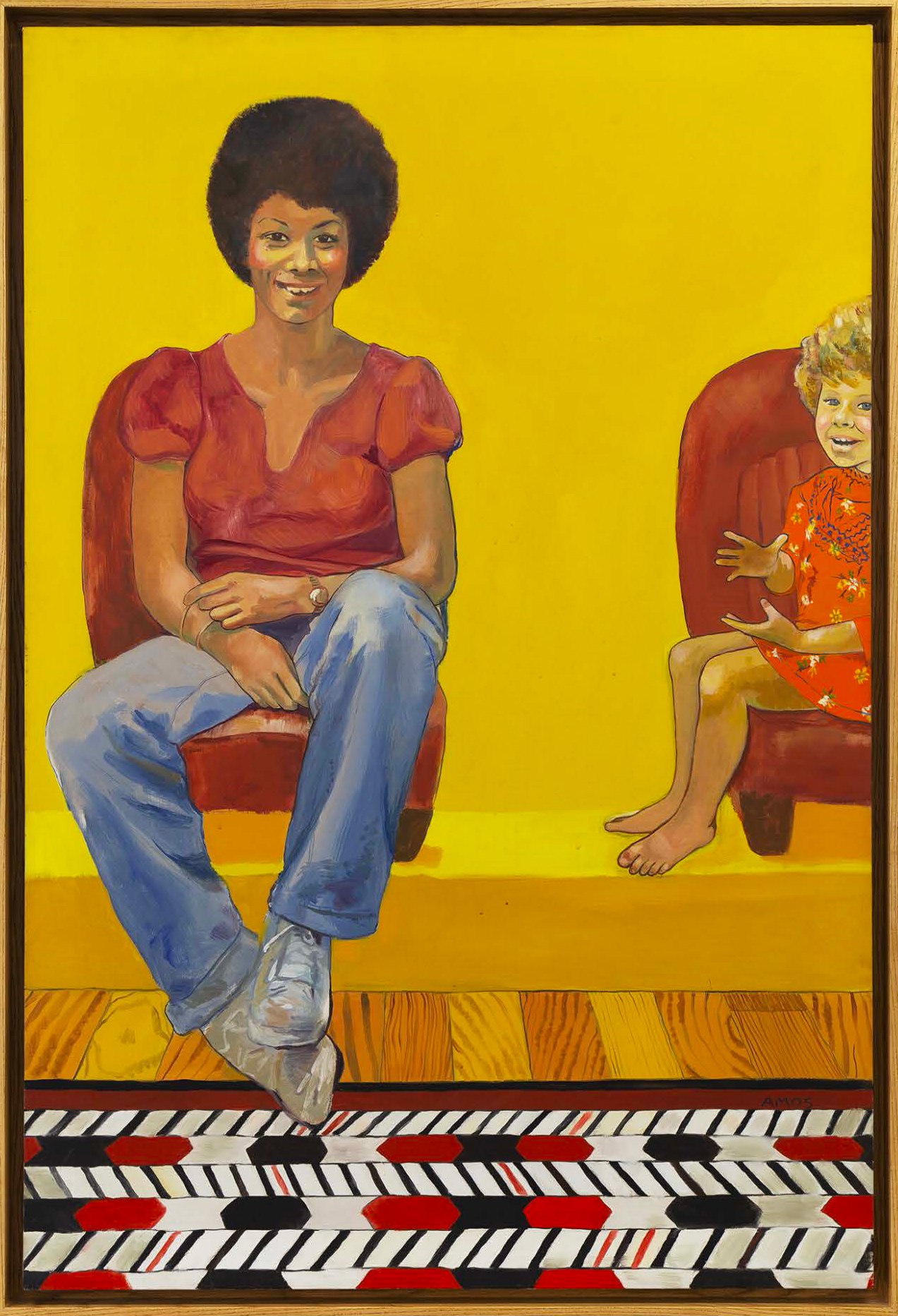
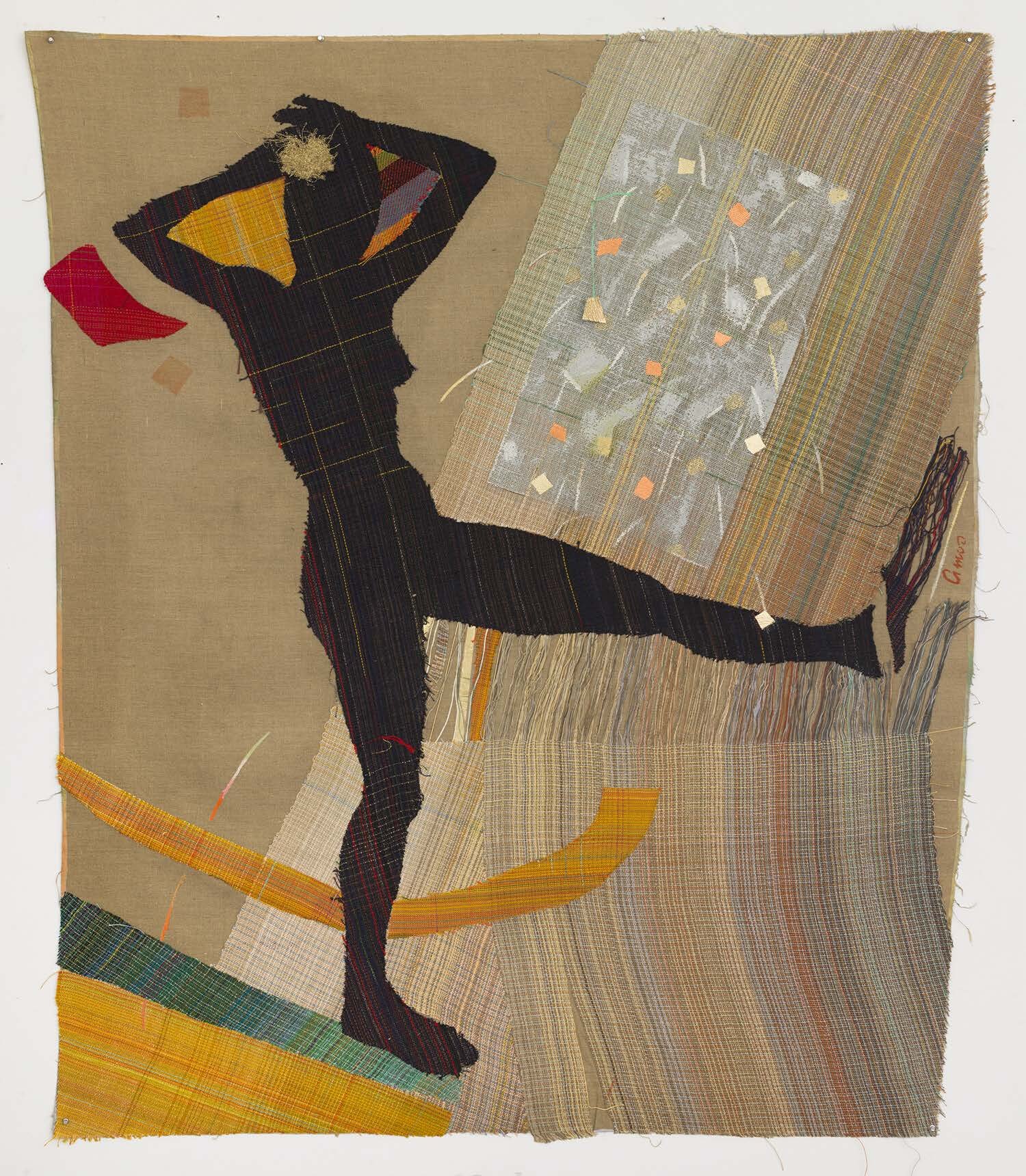
Emma Amos, the youngest and only female member of the Black artist collective Spiral, established herself in SoHo at 32 King Street in 1969, later moving to 21 Bond Street. The daughter of a prominent Black family in segregated Atlanta, she was raised in the cradle of the civil rights movement, and brought this political consciousness with her to New York. Her 1973 painting Eva the Babysitter captures a transitional moment in her life, one in which she struggled to reconcile her life-long calling as an artist with the demands of new motherhood.12 Exhibited in Tate Modern's 2017 exhibition Soul of a Nation: Art in the Age of Black Power, the painting centers its titular babysitter at ease, Amos’s daughter India cropped at the canvas's edge, as if to insist on the babysitter's personhood rather than her function. Amos’s profound feminist awakening during this time resulted in a deep commitment to feminist circles. As exemplified in Swing (1981), she began incorporating her own weaving, a medium long associated with feminine domesticity, into her paintings and prints. She became the only Black permanent member of Heresies, and later a founding member of the Guerrilla Girls.

Emma Amos, Eva the Babysitter, 1973
Emma Amos, Eva the Babysitter, 1973.
Emma Amos, Swing, 1981
Emma Amos, Swing, 1981.

The impact of Black and minority women artists on the SoHo artist scene also yielded new spaces: Howardena Pindell, who herself maintained an artist loft on Broome Street, co-founded the feminist A.I.R. Gallery in 1972. Linda Goode Bryant, who founded her seminal gallery Just Above Midtown in 1974, moved it to SoHo in 1984, bringing crucial exhibition space and thus outward visibility to minority artists in the heart of the New York art world.13 In 1987, June Kelly opened her eponymous gallery on Mercer Street, thus launching one of the first commercial galleries championing the work of Black artists in SoHo. A review of the exhibition history of Billops, Browne, and Amos illustrates a strong network of solidarity: over the course of their careers, these artists participated in over 70 joint exhibitions. Tellingly, most of these shows did not take place in SoHo itself: despite years of investment in the neighborhood, these women still had to seek out alternatives to SoHo's own "alternative spaces," which remained largely out of reach to Black artists.14 Many of their shows were instead self-organized, staged in small galleries, at universities where friends of theirs taught, or in non-art spaces: Amos curated a show at New York's Port Authority in 1984 that included Browne's work as well as her own.

In concluding her 1978 comments on the Third World Women Speak panel at SOHO20, Billops “envisioned a new society, with information flowing freely, without distinctions or restrictions, to all members.”15 That vision was voiced that evening alongside the other women who had made their way to SOHO20 that night, some from mere blocks away, others from Harlem, the Lower East Side, and wherever else their lives and work were otherwise rooted. What their presence proves is not that they belonged to SoHo, but that SoHo belonged to them: proof that Black and minority feminist organizing wasn't something SoHo merely accommodated, but something these women generated, sustained, and fought for.

Notes

  1. 1.

    Lowery S. Sims, "Third World Women Speak," Women Artists News 4, no. 6 (December 1978).

  2. 2.

    Camille Billops, interview by James Hatch, 1973, Hatch-Billops Collection, New York.

  3. 3.

    The Hatch-Billops Archives today comprises over 1,500 interviews, thousands of rare books and periodicals, and 10,000 photographic slides, making it an invaluable resource for studying New York's Black and minority artistic communities in the twentieth century.

  4. 4.

    Six of the artists included in this catalog were featured in Artist and Influence during its forty year run.

  5. 5.

    Beauford Delaney lived in a SoHo loft from 1936-1952), permanently moving to Paris before SoHo's boom as an artistic mecca.

  6. 6.

    Brent Hayes Edwards and Katherine Whatley, "'Ornette at Prince Street': A Glimpse from the Archives," Point of Departure 53 (December 2015), https://www.pointofdeparture.org/archives/PoD-53/PoD53Ornette.html.

  7. 7.

    Richard Kostelanetz, SoHo: The Rise and Fall of an Artists' Colony (Routledge, 2003), 41.

    In his own recollections of SoHo, artist Richard Kostelanetz in fact recalls a seeming lack of African American presence in the hothouse of artistic activity that was SoHo in the 1970s.

  8. 8.

    Maya Harakawa, "After the Renaissance: Art and Harlem in the 1960s" (PhD diss., City University of New York, 2022), 29-31.

  9. 9.

    Aaron Shkuda's The Lofts of SoHo: Gentrification, Art, and Industry in New York, 1950–1980 (Chicago: University of Chicago Press, 2016), for instance, tells this history primarily through the lens of real estate, zoning, and artist advocacy, with little attention to race. This omission is likely inherited in part from the official records on which such institutional histories typically rely, which themselves may have under-registered Black artists' presence in the neighborhood.

  10. 10.

    Vivian Browne, interview by Emma Amos, March 10, 1985, published in Artist and Influence IV (1986), accessed at the Hatch-Billops Collection, New York.

  11. 11.

    "Vivian Broune" [Vivian Browne], listed as a member residing at 451 West Broadway, SoHo Artists Association records, Box 1, Folder 5, Archives of American Art, Smithsonian Institution, https://edan.si.edu/slideshow/viewer/?damspath=/CollectionsOnline/sohoarti/Box_0001/Folder_005.

  12. 12.

    Emma Amos, “On Motherhood, Art and Apple Pie,” in M/E/A/N/I/N/G: An Anthology of Artists’ Writings, Theory, and Criticism, ed. Susan Bee and Mira Schor (Duke University Press, 2000), 253-55; Amos, “Contemporary Feminism” 10-11.

  13. 13.

    Dennis Raverty, "Alternative Exhibition Spaces for Black Artists in New York City during the 1970s: Towards a Partial History," International Review of African American Art 22 (2008).

  14. 14.

    Jeff Chang, Who We Be: The Colorization of America (MacMillan Publishers, 2016), 127.

  15. 15.

    Sims, "Third World Women Speak."

About the Author

Ethel Renia is a researcher, editor, and curator specializing in feminist art history and alternative institutional models. She is currently co-editing the first major publication on the Robert Blackburn Printmaking Workshop, and serves as the Director of Art and Archives at Hatch-Billops Collection, in New York.